
No data, no change
Plus: why to expect a weak Q1

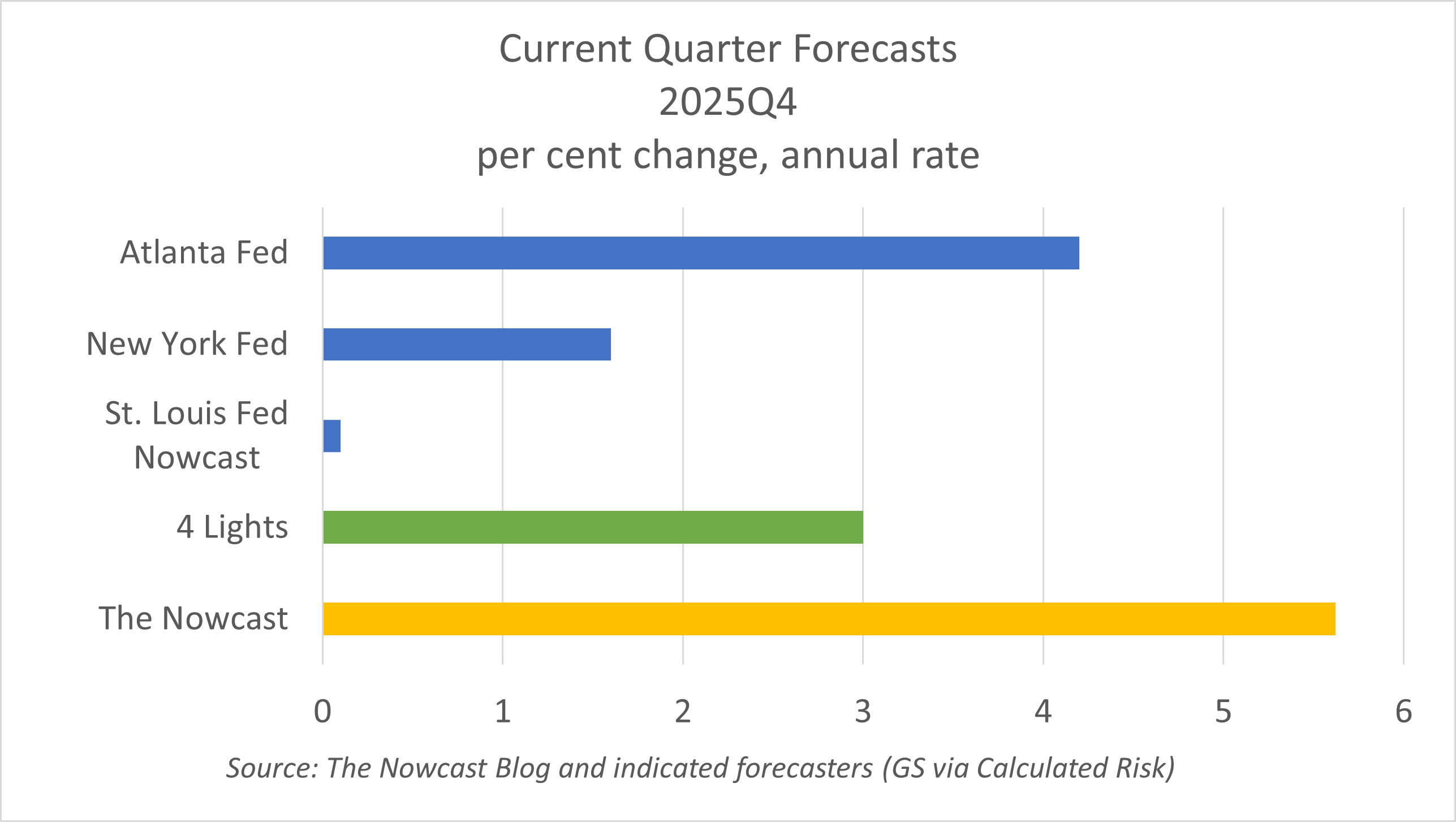
The slow data week left the Nowcast forecast unchanged at 5.6%. It left other forecasts unchanged as well. The Atlanta Fed, at 4.2%, is in the same ballpark as the Nowcast, the New York Fed stands at a more moderate 2.7% (which is high for that model) and the St. Louis Fed is at just 0.1% (which is very low for that model).
The Atlanta Fed projection is the only one that is done by GDP component, and so can be compared to the Nowcast. The Atlanta Fed is more optimistic about investment spending than the Nowcast, but the biggest difference is in exports. The Nowcast projects export growth at 11.3% for the quarter, while the Atlanta Fed projects growth of just 0.8%. The import growth projections, on the other hand, are almost identical. This may be because of exports of precious metals, which don’t necessarily count in GDP. And, indeed, the export growth is concentrated in industrial supplies and materials (which is where the gold and silver exports would show up). So the Nowcast may be overly optimistic about exports.
The Nowcast provides a one-quarter out projection as well. And the Q1 forecast is for no growth at all, which would suggest that the overall trend of the economy is more moderate than the Q4 figure suggests (even with those export adjustments). A few things to keep in mind:
Consumer spending is currently on track to remain relatively strong. The forecast is now suggesting that Q1 will see a third quarter of real consumer spending growth over 3.0%. That’s outstanding, although it’s been supported by a fall in the personal saving rate from 5.5% in April to 3.5% in November.
Investment spending may be slowing. Shipments of nondefense capital goods (excluding aircraft), a good indicator of underlying investment, were accelerating (on a year-ago basis) until November. A change in the underlying trend would be concerning. And construction spending is definitely weak.
Exports may be slowing, which would remove another driver of growth. In fact, the model suggests that trade will play a major role in limiting growth in Q1.
The US economy is preforming amazingly well given the high policy uncertainty, tariffs, and labor problems created by the Administration’s immigration enforcement efforts. Whether it can continue is a rather Big Question.
